
Who we are:
The San Diego Carnivorous Plant Society (SDCPS) is a community of carnivorous plant lovers, enthusiasts, amateurs, inquirers, and aficionados, all connected by a shared passion for these extraordinary plants. Based in San Diego, we are an informal group of volunteers dedicated to fun, learning, conservation, and community.
Our meetings are open to the public, and newcomers are always welcome. Whether you’re simply curious or already cultivating a collection, you’ll find friendly people eager to share knowledge, plants, and inspiration.
🌿 Our Mission
We focus on:
Education — teaching people of all ages about carnivorous plants
Conservation — supporting efforts to protect species and their native habitats.
Community — connecting growers, scientists, educators, and hobbyists.
Our outreach includes schools, libraries, botanically focused events, fairs, and other public programs.
🌿Nonprofit Status
The San Diego Carnivorous Plant Society is a 501(c)(3) public charity, classified under IRC Section 509(a)(2).
Donations to SDCPS are tax-deductible under IRC Section 170.
We are qualified to receive tax-deductible bequests, devises, transfers, and gifts under Sections 2055, 2106, and 2522.
If you’d like to support our mission, your contribution directly helps education, conservation, and research.
🌿How Our Sales Support the Mission
Our yearly plant sale — along with sales at meetings and field events — provides essential funding for our organization. A percentage of each sale helps us:
Purchase supplies and materials for educational outreach.
Support programs at schools, libraries, and community events.
Cover expenses related to putting on our annual show and sale which encourages community participation and education.
Fund research grants related to:
Carnivorous plant cultivation
Species preservation
Habitat conservation
These proceeds allow us to collaborate with scientists, conservationists, and educators throughout the California region. We often invite those who have received grants to speak at our meetings to allow the grantee to share the results of our grants and their research in the important field of carnivorous plant preservation.
History of the San Diego Carnivorous Plant Sociality
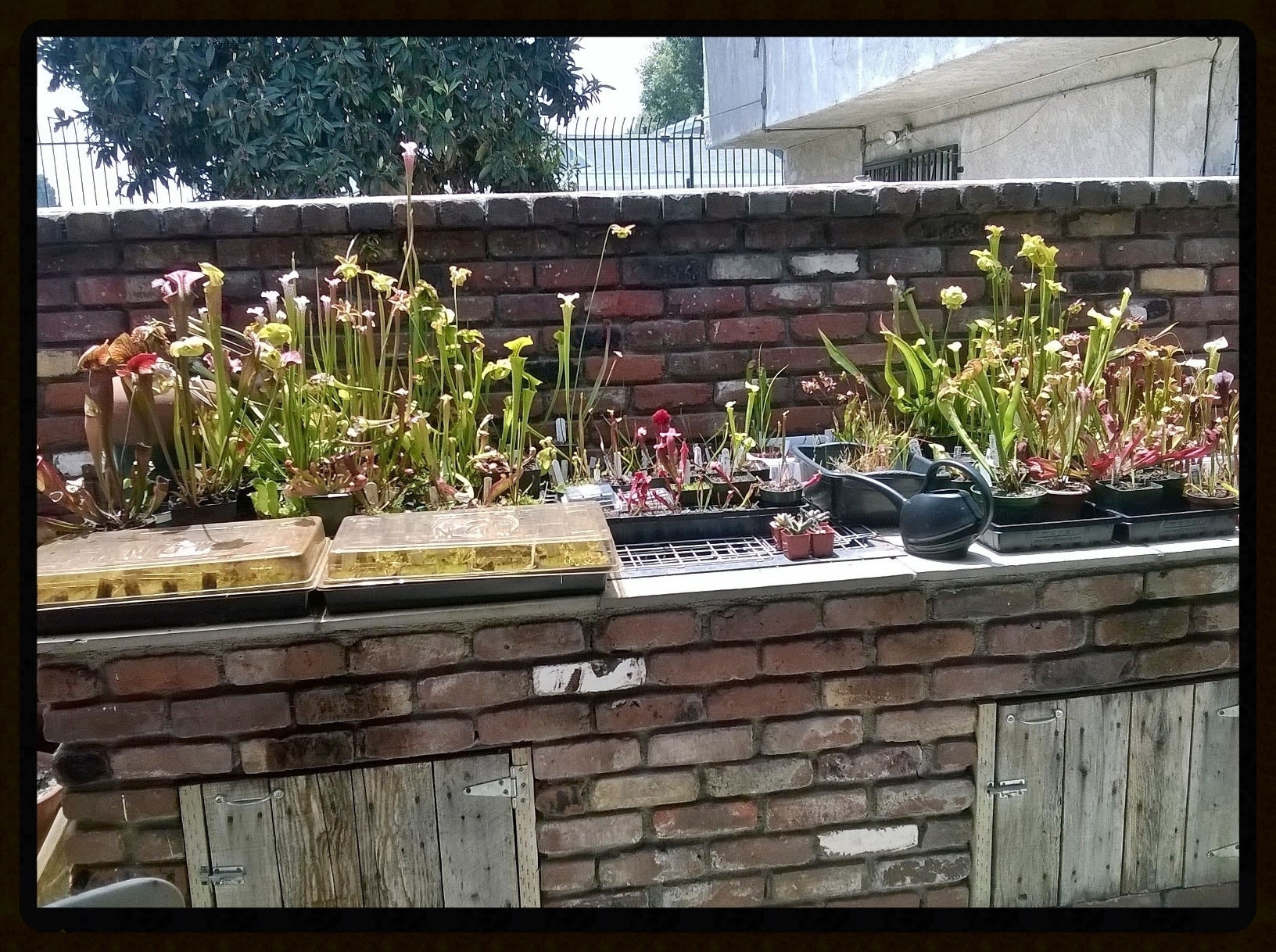
The San Diego Carnivorous Plant Society, formally San Diego Carnivorous Plant Club, was started in 2013. By Allyson Long who had cultivated a small collection of carnivorous plants (Sarracenias mostly) by scouring the internet and the San Diego Reader in the early 2000s. There were signs of a previous SDCPS but it seemed defunct with interest hard to find. Continuing to occasionally meet local people who were selling plants over the next decade, Allyson contacted San Diego Zoo’s Senior Horticulturist Judy Bell about the Zoo’s carnivorous plant bog. In 2012 she became a Zoo horticulture department volunteer and was able to work alongside the amazing Judy Bell, which was the motivation to start the web-based San Diego Carnivorous Plant Club (SDCPC). With interest gaining over the next year, and connecting with Jason Hooton from LACPS, Allyson decided to branch out and attend LACPS meetings, where she discovered there were San Diego folks! Jason provided enthusiasm, help with networking, LOTS of plants, and the big push to make the SDCPS really happen.
The first meeting was held in April 2015 at an organic CSA farm. Despite being one of the coldest and rainiest days San Diego had all year, people showed up! Locals, a group from Ensenada Mexico, and LACPS members! The consensus among attendees from that meeting was “about time!”
Over time Allyson handed the reins of the San Diego Carnivorous Plant Society to Hong Ran Peng and Joshua Cho. Together they have continued to build the foundational organization and joined by Jim Soe Nyun and Aria Huerta, have continued to nurture and grow the well regarded society we have today.
Thank you to everyone who has shown interest, given support, and time, and all who will attend future meetings. A special thank you (to the moon and back a thousand times over!) to Judy Bell and Jason Hooton.